


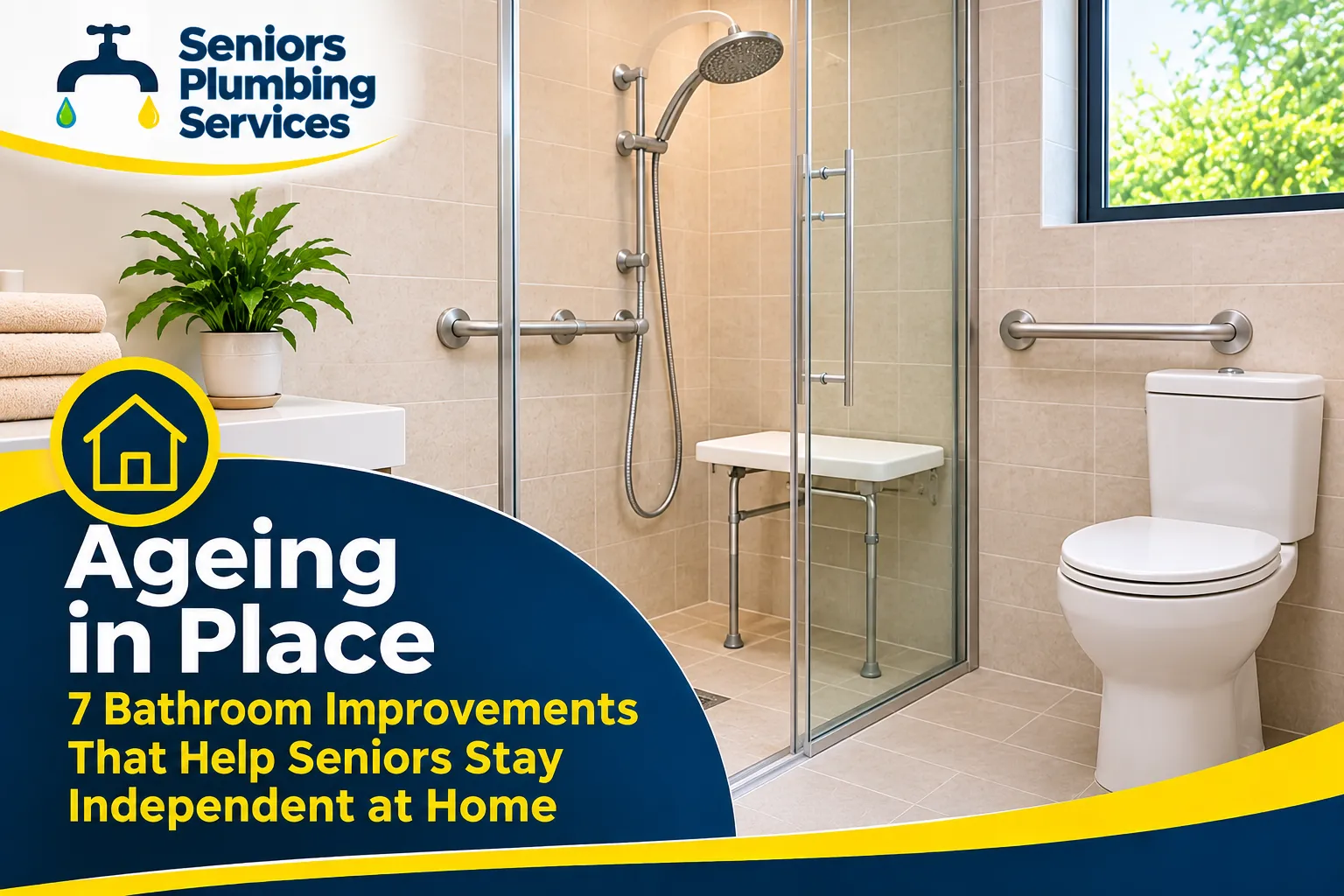
Many older Australians want to remain in their own homes for as long as possible. Known as ageing in place, this approach allows seniors to maintain familiar surroundings, routines and independence as their needs change.
However, bathrooms can become increasingly difficult to use as mobility, strength and balance change with age.
Fortunately, practical bathroom improvements can make everyday activities more convenient and help older homeowners maintain a safer living environment.
Seniors Plumbing Services helps homeowners throughout Greater Sydney and surrounding regions explore plumbing and bathroom upgrades designed with older Australians in mind.
1. Install a Walk-In or Low-Step Shower
Stepping over a high bath edge or shower hob can become difficult for someone with reduced mobility.
A walk-in shower or low-step shower may provide easier access, depending on the bathroom layout and the user’s needs.
When planning a shower upgrade, consider:
- The height of the shower entry.
- Available space for movement.
- Suitable shower screens and doors.
- Drainage and floor falls.
- Waterproofing requirements.
- Whether a shower seat may be appropriate.
A complete shower conversion may involve plumbing, waterproofing and building work.
2. Install Shower Grab Rails
Grab rails provide a fixed support point when entering, leaving or moving around the shower.
They should be positioned according to the user’s needs and securely fixed to suitable structural support.
An occupational therapist can help determine appropriate positions, particularly where a person has specific mobility requirements.
3. Consider a Shower Seat
Standing throughout a shower can become tiring for some older people.
A suitable shower seat may allow someone to sit while bathing. Options include fixed seats, fold-down seats and appropriately designed portable shower chairs.
The selected product should be suitable for the user’s weight and mobility requirements, with appropriate support and positioning.
4. Upgrade to a Comfort-Height Toilet
A standard toilet can be difficult to use for people with knee, hip or mobility problems.
A comfort-height or extra-tall toilet may make sitting down and standing up easier for some users.
Other options include raised toilet seats and toilet support rails.
Before choosing a new toilet, consider the user’s height, mobility, available bathroom space and existing plumbing connections.
5. Install Toilet Support Rails
Toilet support rails can provide an additional handhold when using the toilet.
Depending on the bathroom layout, rails may be installed beside the toilet or as part of a suitable support frame.
The fixing method is important. Rails that are not properly secured to suitable supporting structures should not be relied upon for body-weight support.
6. Upgrade Shower and Bath Fittings
Some shower and bath fittings are easier to use than others.
Potential upgrades include:
- Handheld showerheads.
- Easy-to-operate shower controls.
- Conveniently positioned taps.
- Thermostatic mixing valves where appropriate.
- Accessible shower fittings.
- Practical bath and shower accessories.
The right fittings can make everyday bathing more convenient, particularly for people who have difficulty reaching or operating conventional fixtures.
7. Improve Bathroom Layout and Access
A bathroom may need more than new fixtures to become easier to use.
Consider whether there is sufficient room for walking aids, wheelchairs or assistance from another person.
Other improvements may include better lighting, suitable non-slip flooring, easier-to-open shower doors and removing unnecessary obstacles.
An occupational therapist can assess the bathroom and recommend modifications suited to the person’s needs.
How Much Do Senior Bathroom Modifications Cost?
The cost depends on the size of the bathroom, existing plumbing, selected fixtures and the extent of the work.
A simple fixture replacement may be relatively straightforward, while converting a traditional bathroom into an accessible wet area can involve more extensive work.
When requesting a quote, ask for a breakdown of:
- Plumbing labour.
- Fixtures and fittings.
- Waterproofing.
- Building or tiling work.
- Electrical work, if required.
- Any additional accessibility equipment.
This makes it easier to compare quotes and plan your budget.
Bathroom Plumbing for Ageing in Place in Sydney
Seniors Plumbing Services helps older Australians with practical plumbing improvements, including toilet installations, shower repairs, accessible bathroom plumbing and hot water upgrades.
Whether you are planning ahead for retirement or helping an elderly parent remain independent, we can discuss plumbing options suited to your home.
We service Greater Sydney, the Blue Mountains, Newcastle, the Central Coast and Wollongong.
Call 0418 224 182 to discuss bathroom upgrades for seniors.
Frequently Asked Questions
What is the most important bathroom modification for seniors?
There is no single improvement that suits everyone. The best changes depend on the person’s mobility, balance, strength and bathroom layout.
Can I make my existing bathroom more accessible without renovating it?
Often, yes. Some improvements, such as suitable grab rails, shower fittings and toilet upgrades, may be possible without a complete renovation.
Who can assess a bathroom for accessibility?
An occupational therapist can assess how someone uses their bathroom and recommend suitable modifications. A qualified plumber can advise on plumbing work and installations.
Are bathroom modifications covered by government assistance?
Some older Australians or people with disability may be eligible for home modification assistance through particular programs. Eligibility, funding and approved work vary, so check current government and provider requirements.
Leave a Reply