


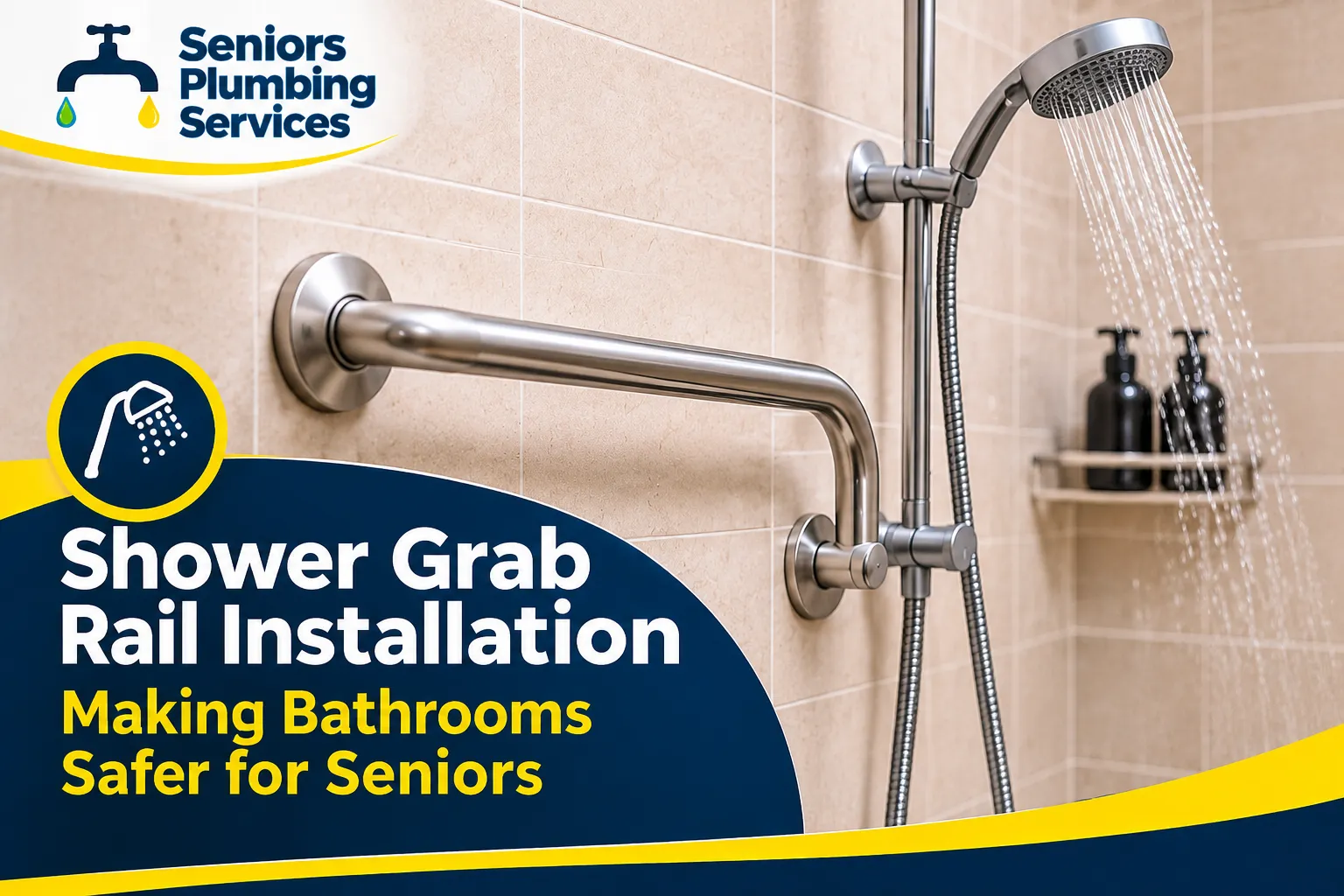
The bathroom can become one of the most challenging areas of the home as mobility and balance change with age. Wet floors, slippery shower surfaces and awkward movements can make everyday bathing more difficult.
Installing suitable shower grab rails can provide additional support when entering, leaving and using the shower. For older Australians who want to remain independent at home, professionally planned bathroom safety improvements can make an important difference.
Seniors Plumbing Services helps homeowners explore practical bathroom plumbing and accessibility solutions throughout Greater Sydney and surrounding regions.
What Are Shower Grab Rails?
Shower grab rails are fixed support bars designed to give users something secure to hold while moving around the shower or bathroom.
They are available in different lengths, shapes, finishes and configurations.
Common types include:
- Straight grab rails: Horizontal or vertical support bars.
- Angled grab rails: Designed to provide support at different positions.
- L-shaped grab rails: Combine horizontal and vertical support.
- Shower entry rails: Positioned near the shower entrance.
- Bathroom support rails: Installed near other bathroom fixtures where appropriate.
The best choice depends on the person’s mobility, how they use the shower and the bathroom’s layout.
Why Install Grab Rails in a Senior’s Bathroom?
A correctly selected and installed grab rail can provide a stable handhold when someone is moving around the bathroom.
Potential benefits include:
Additional support: Rails provide something to hold while entering or leaving the shower.
Greater confidence: Having suitable support points may make showering feel more manageable.
Improved independence: Some people may find it easier to complete everyday bathroom activities without assistance.
Practical bathroom upgrades: Grab rails can be incorporated into existing bathrooms without necessarily requiring a complete renovation.
Grab rails are not a guarantee against falls. They should form part of a broader approach to bathroom safety, including suitable flooring, lighting and shower access.
Where Should Shower Grab Rails Be Installed?
Grab rail positioning is one of the most important considerations.
Depending on the bathroom and the user’s requirements, rails may be installed:
- Near the shower entrance.
- Along the shower wall.
- Beside the shower controls.
- Near a shower seat.
- Beside the bath.
- Near the toilet.
The correct position depends on how the person moves, where they need support and the available wall structure.
An occupational therapist can assess the user’s movement and recommend appropriate rail positions. This can be particularly helpful for people with specific mobility or disability requirements.
Why Professional Grab Rail Installation Matters
A grab rail needs to be securely fixed to a suitable supporting structure. Simply attaching a rail to a tiled surface without appropriate structural support may not provide a safe installation.
Before installation, the wall construction, fixing locations and mounting requirements should be considered.
Professional installation helps ensure that:
- The selected fixing method is suitable for the wall.
- The rail is positioned appropriately.
- Fixings are compatible with the rail and supporting structure.
- The installation is suitable for the intended application.
- Waterproofing is properly considered where penetrations are made in wet areas.
Always follow the manufacturer’s installation requirements and applicable building and waterproofing requirements.
Can Grab Rails Be Installed in an Existing Shower?
In many cases, yes. Grab rails can often be added to an existing bathroom without replacing the shower.
However, the installation depends on the wall construction, available fixing points, waterproofing and the selected rail.
If the existing wall cannot safely support the rail, additional work may be necessary. It is important to assess this before installation.
Other Bathroom Safety Improvements for Seniors
Grab rails are only one part of an accessible bathroom.
Other improvements worth considering include:
- Walk-in or low-step showers.
- Suitable shower seats.
- Handheld shower fittings.
- Accessible shower controls.
- Non-slip flooring solutions.
- Comfort-height toilets.
- Toilet support rails.
- Improved bathroom lighting.
The most appropriate combination depends on the individual’s needs and the existing bathroom.
Shower Grab Rail and Bathroom Plumbing Services for Pensioners
Seniors Plumbing Services assists older Australians with shower plumbing, accessible bathroom upgrades, toilet installations and other practical plumbing improvements.
Whether you are upgrading your own bathroom or arranging improvements for an elderly parent, we can help discuss suitable plumbing solutions.
We service Greater Sydney, the Blue Mountains, Newcastle, the Central Coast and Wollongong.
Call 0418 224 182 to discuss shower upgrades and bathroom plumbing for seniors.
Frequently Asked Questions
How many grab rails should a shower have?
There is no single number that suits every bathroom. The number and placement depend on the user’s mobility, shower design and support requirements.
Can grab rails be installed on tiled walls?
Yes, provided the wall behind the tiles has suitable structural support and the correct fixing method is used.
Can suction-cup grab rails be used instead?
Suction-cup products may be suitable as temporary aids in some circumstances, but they should not be assumed to provide the same structural support as securely fixed grab rails. Check the manufacturer’s instructions and intended use.
Can I have grab rails installed beside my toilet as well?
Yes. Toilet support rails can be installed where the structure and available space permit, with positioning selected to suit the user.
Leave a Reply